
Stories From the Families We've Worked With

Every human inheritance collection begins differently. A phone call from an adult child who just lost a parent. A wife who wanted her husband's voice kept somewhere real. A mother who decided her teenage son deserved to know who she was, fully, before life moved too fast. What follows are ten of the stories that brought families to LegacyNex - told without names, but with everything else intact.
"I knew the window was open."
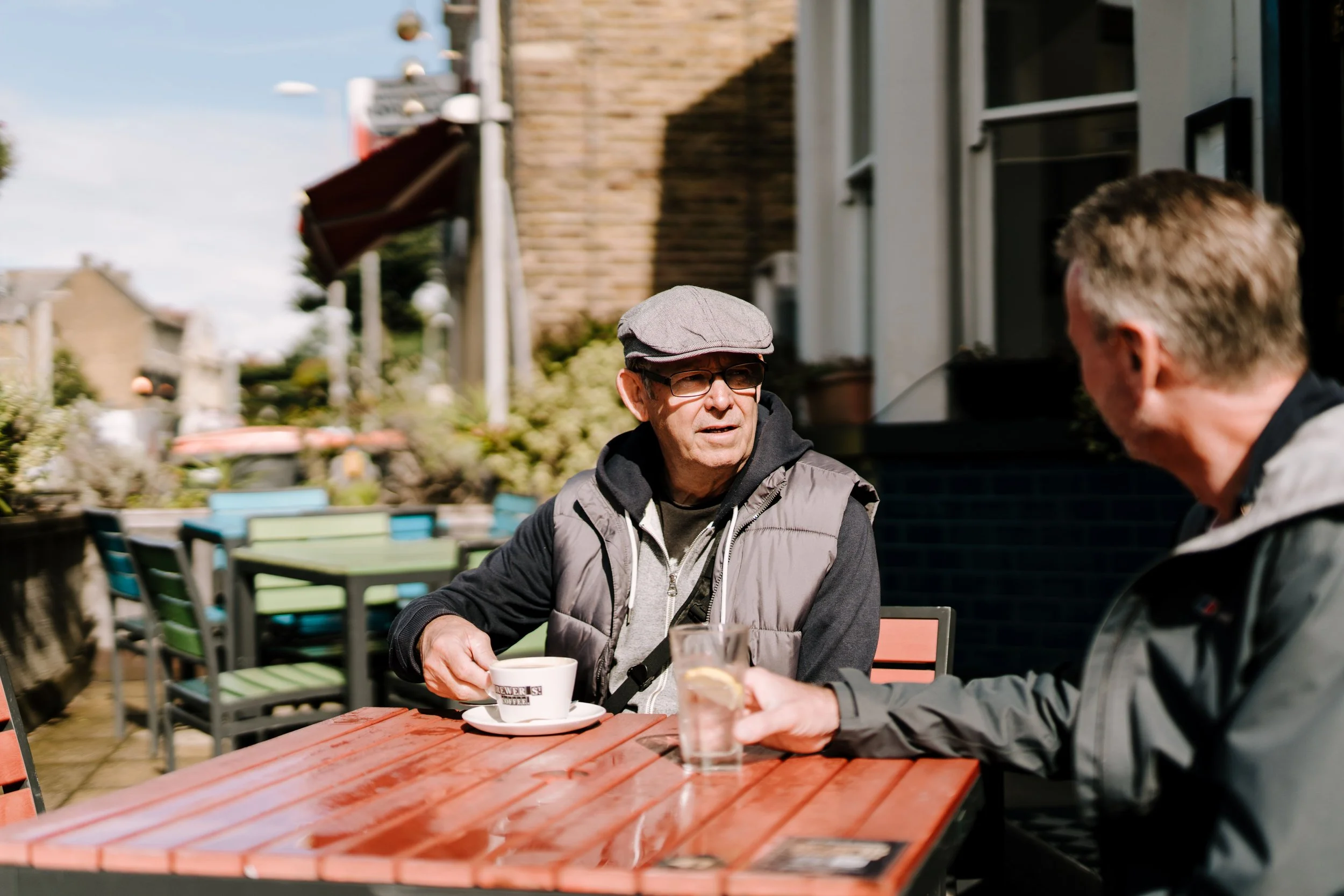
When a man's mother passed away, he didn't fall apart - he got practical in the way grief sometimes makes you. He knew his father was still here. Still sharp, still present, still full of a life nobody had properly asked about. He booked a LegacyNex collection within weeks of the funeral.
His father, it turned out, was extraordinary in the way that people who've lived quietly often are. He spoke at length, with precision and warmth, about things his son had never thought to ask. The interview ran the full session. Afterward, his son said he hadn't expected his father to be so — the word he used was eloquent. The man had lived an entire interior life that the family had only ever seen the edges of.
The recording exists now. So does the book. The window that opened when one parent was lost led directly to capturing the other.

"He printed 50 copies."
Eight years ago, a man received a terminal diagnosis. He's still here - living with intention, with clarity, with a specific understanding of what time means that most people spend a lifetime avoiding. His wife, who has watched him carry that knowledge gracefully, gave him a LegacyNex collection as a gift. She wanted his story kept. His message kept. The way he'd faced the last eight years, kept.
What surprised him wasn't the interview — it was how easy it was. He'd expected something effortful, something that required him to perform or organize or explain himself. Instead it was a conversation. His words came naturally because someone was genuinely asking for them.
He had fifty copies of the finished book printed. He distributed them to friends and family himself — not posthumously, not as a final gesture, but while he was still here to hand them over. That detail says everything about who he is.






"I wanted him to know who I am."
She lost her own mother when she was young — young enough that she grew up understanding, in a way most people don't until much later, that the person behind the parent is a stranger you only get a certain amount of time to know. She didn't want that for her son.
He's a teenager now. She booked a LegacyNex collection for herself — not because anything was wrong, not because she'd received a diagnosis, but because she decided her son deserved a record of who she actually was, not just who she was to him. Her insights, her beliefs, her reflections on the life she'd built.
What surprised her was how deep the interview went. She'd expected to talk about her life. She ended up talking about what her life meant — the lessons she'd drawn, the things she believed, the things she wanted him to carry. She said afterward she hadn't known she had that much clarity until someone asked for it.
"So all of them could have it."
A man came to LegacyNex not for himself, and not for one parent — but for both of his parents together, and for everyone who would come after them. He, his sister, and their children. He wanted the story of where they'd all come from to exist somewhere real, accessible to every branch of the family, for generations that hadn't been born yet.
The collection captured both parents in audio and in writing. When they heard the finished recording, what they commented on was how easy the process had been — they'd expected something formal, something effortful. Instead it had felt like a conversation. The book that arrived a month later was something none of them had known they needed until they were holding it.
"She's adding it to her will."
She didn't tell her adult children she was doing it. She booked the collection quietly, completed the interview, received the book — and decided it would be part of what she left them, tucked alongside the practical documents of her estate, for them to find when the time came.
It's a particular kind of love, that kind of planning. Not morbid — deliberate. She knew what a will could carry and what it couldn't, and she decided the part it couldn't carry was worth arranging for separately. Her voice, her values, her perspective on the life she'd lived — waiting for her children in a hardcover book, for a day she's preparing for without dwelling in.
"He's twenty, and he loved it."
She and her husband recorded together — their voices, their story, their life as they'd built it. The finished book went to their son as a birthday gift. He's twenty. Old enough to receive it fully, young enough that having it now means he'll have it for most of his life.
What she talked about afterward wasn't the book itself but the process. She used the word intentional — the way the interview moved, the way it was structured, the way it created space for things that don't come up in ordinary conversation. She'd expected something efficient. She got something that felt considered, from the first question to the last.
Her son's reaction when he unwrapped it is not the kind of thing that translates easily into words. It's the kind of thing a parent knows when they see it.
"So the next generation knows where they came from."
She has no children of her own, but she has a sister, and they both have a family — a history, a lineage, a set of values and insights that exist nowhere in writing and live only in the memories of the people who are still here to hold them.
She and her sister chose to capture the family story together. Not for themselves — for the generation coming up behind them. Nieces, nephews, young people who are already old enough to ask where they came from and what it means. The collection became a record of the family's character: where they'd come from, what they believed, what they wanted the next generation to understand.
Legacy, it turns out, doesn't require a direct line. It requires intention.
"They captured our marriage."
His wife was unwell. He booked the collection for her — to capture her voice, her story, her perspective while the window was open and clear. That was the plan going in.
What happened in the interview was something different. He was present in the room, as spouses often are — and gradually, naturally, the conversation became about both of them. Their marriage. The dynamic of who they were together, the texture of a life built in partnership, the way they spoke about each other when someone was actually listening.
Their sons will have their mother's voice. They'll also have something rarer: a record of their parents' love, told from inside it, by both of them, at a moment when they both knew it mattered.
"The echoes of the house."
They're in their 40s, their children are young, and by any measure life is good. That's exactly why they did it.
They'd both lost their fathers — not recently, but in the way that shapes how you think about time. They knew, from experience rather than theory, what it means to wish you had a recording of a voice you can no longer hear. They didn't want their children to have to learn that lesson the same way.
They recorded together. A couple at the height of their life, capturing the sound of who they were, the values they were raising their children inside, what they called the echoes of the house — the atmosphere of a family that children absorb without knowing they're absorbing it. The book exists now. The audio exists. Whenever their children want to return to who their parents were at this moment, it's there.
"I didn't know how clear I was."
She came to the interview carrying a lot. A recent divorce. Three children. A life being rebuilt from the middle. She wanted to leave her children something — her reflections, her insights, her honest thoughts about their future — and she'd decided this was the moment to capture it, even though the moment was hard.
What surprised her was what she found when she got there. Not grief, not confusion — clarity. Her thoughts on her children's futures, her beliefs about what they'd need, her reflections on the life she'd lived and the life she was building: all of it came out organized, direct, and certain in a way she hadn't expected from herself at that particular point in time.
The interview was emotional. So was receiving the finished book. But what she took away wasn't the emotion — it was the discovery that she knew exactly who she was, even when everything around her was uncertain. The recording holds that. So does she.
"I wanted his spirit kept."
She didn't come to LegacyNex because anything was wrong. Her dog is four years old, healthy, fully himself — a presence in her life so specific and vivid that she'd decided, with the clarity of someone who loves fiercely and thinks ahead, that waiting made no sense.
She's the kind of dog mom who knows exactly who her dog is. Not just what he looks like or what he does, but the particular quality of his personality — the way he moves through a room, the things that light him up, the dynamic between them that anyone who's spent time with them would recognize immediately. She wanted that kept. Not as a memory to return to later, but as a record made while he was right there, fully alive, at his most himself.
What the Companion Legacy collection captured surprised even her. Spirit is a word that sounds abstract until someone actually manages to hold it still. The finished collection did that — the particular energy of who he is, the texture of their bond, the story of what he'd meant to her life rendered in a way that a photograph never quite reaches. You can see a dog in a photo. You can know a dog in a collection like this.
She wasn't preserving something she was losing. She was honouring something she had.
"It gave me somewhere to put it."
Her dog was gone by the time she came to LegacyNex. The loss was real and recent, and she arrived carrying what anyone carries in those weeks - grief without a clean place to land, love with nowhere left to go.
A remembrance Companion Legacy collection is built for exactly this moment. Not to move someone through their grief faster than it wants to move, but to give the love somewhere to live that isn't just absence. A record of who the dog was, what they'd meant, the specific shape of the bond — kept properly, in words and in a finished collection, rather than scattered across photos and half-formed memories.
What it gave her was peace. And comfort. And something that grief rarely offers on its own: a sense that the story had been honoured rather than simply ended. The love hadn't gone anywhere. It had just found a place to rest.
These are real families. Names and identifying details have been changed to protect their privacy.